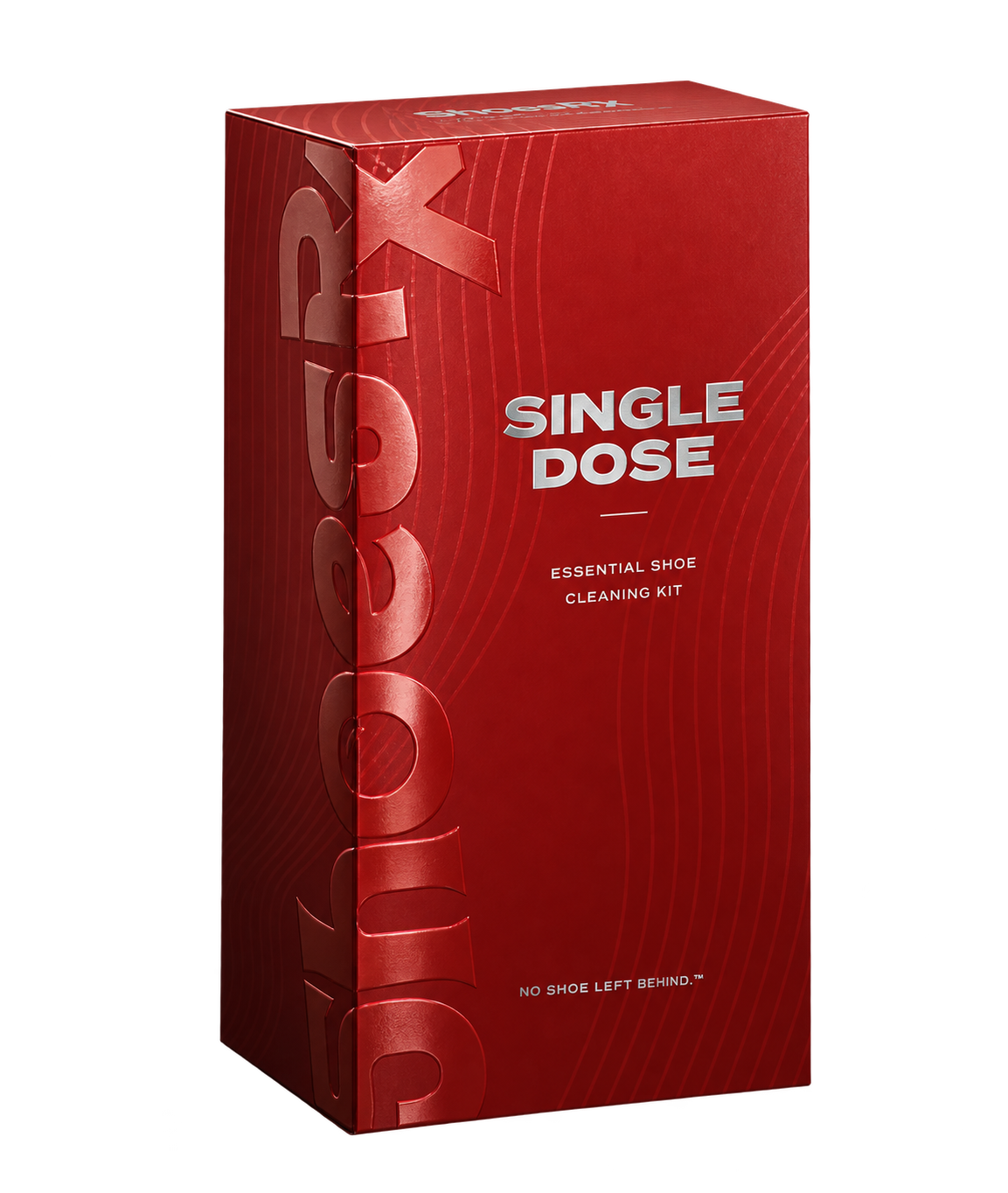
We make shoe care the way it should have been made all along — a water-based cleaner, a bleach-free whitener, and a PFAS-free protector. Safe on the materials you love. Safe in your home.
The formulas
Three formulas. One routine.
Each ShoesRx product is purpose-built for a single step of the routine — and engineered to work on the full range of modern footwear materials.
CLEAN
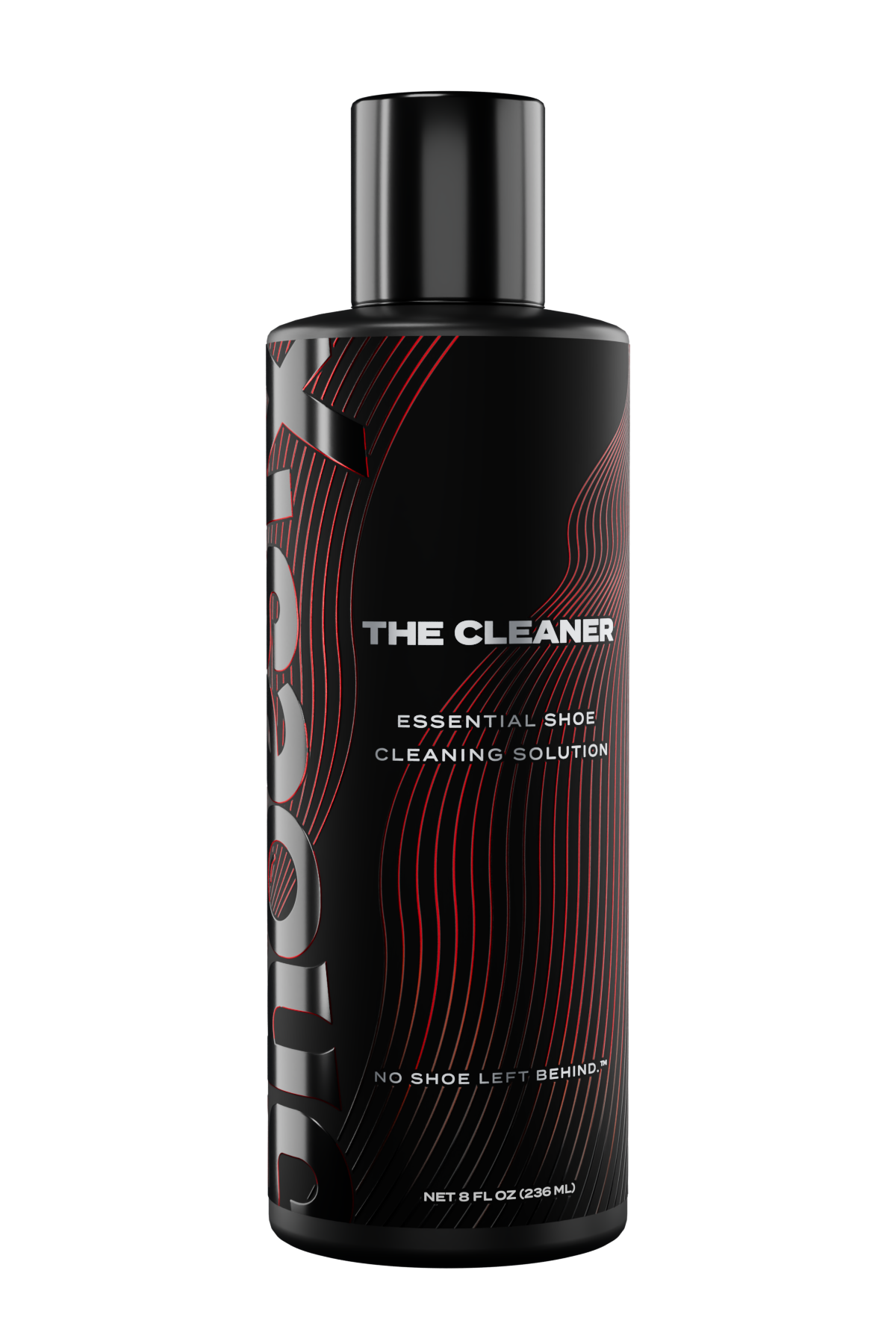
RX-01 · 8 fl oz
ShoesRx™ Cleaner
A water-based foaming cleanser that lifts dirt, oil, and everyday grime from leather, knit, mesh, and canvas — gentle enough for regular use, strong enough to actually work.
Water-based
Non-flammable
pH-balanced
How it's used
Dampen the brush, add a small amount of ShoesRx Cleaner and work into a light foam directly on the upper.
Move in small circular motions across panels, midsole and laces; use the sponge for soft materials and trim.
Wipe residue with a clean cloth and let footwear air dry away from direct heat or sunlight.
Limits & precautions
Patch-test on a small hidden area first.
Use the sponge, not the brush, on soft materials and trim.
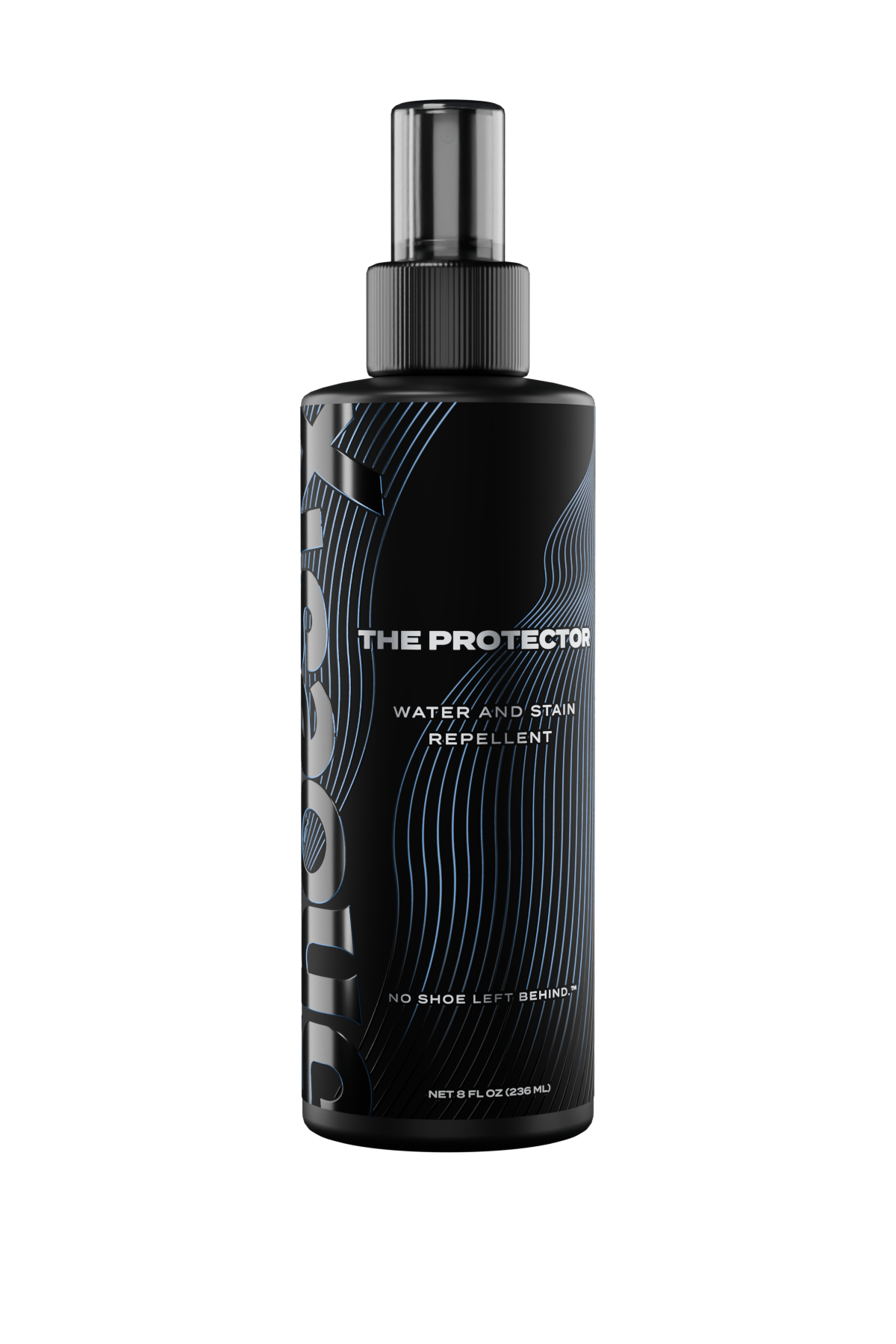
A breathable silicone-based water and stain repellent. Mists on clear, dries invisible, and shields against rain, slush, and spills — without the PFAS chemistry the rest of the industry still hides behind.
Fluorine-free
Water-based
Breathable
How it's used
Spray ShoesRx Protector evenly from about 6 inches away on clean, dry footwear.
Let it cure for 24 hours before wear.
Limits & precautions
Apply only to clean, dry footwear.
Spray evenly from about 6 inches; don't soak the material.
Guidance comes from ShoesRx product instructions, which name leather, mesh, canvas, rubber and select suede. For anything else, patch test first, scan your shoe, or ask us.
The system
Clean. Whiten. Protect.
A three-step routine. Every couple of weeks on rotation pairs, less often on grails. Always spot-test on an inconspicuous area first. Three different jobs — not interchangeable, and not every shoe needs all three.
Wet the brush, dose a small amount of Cleaner, and work in light circles. Lift the dirt into the foam, then wipe clean with a damp microfiber.
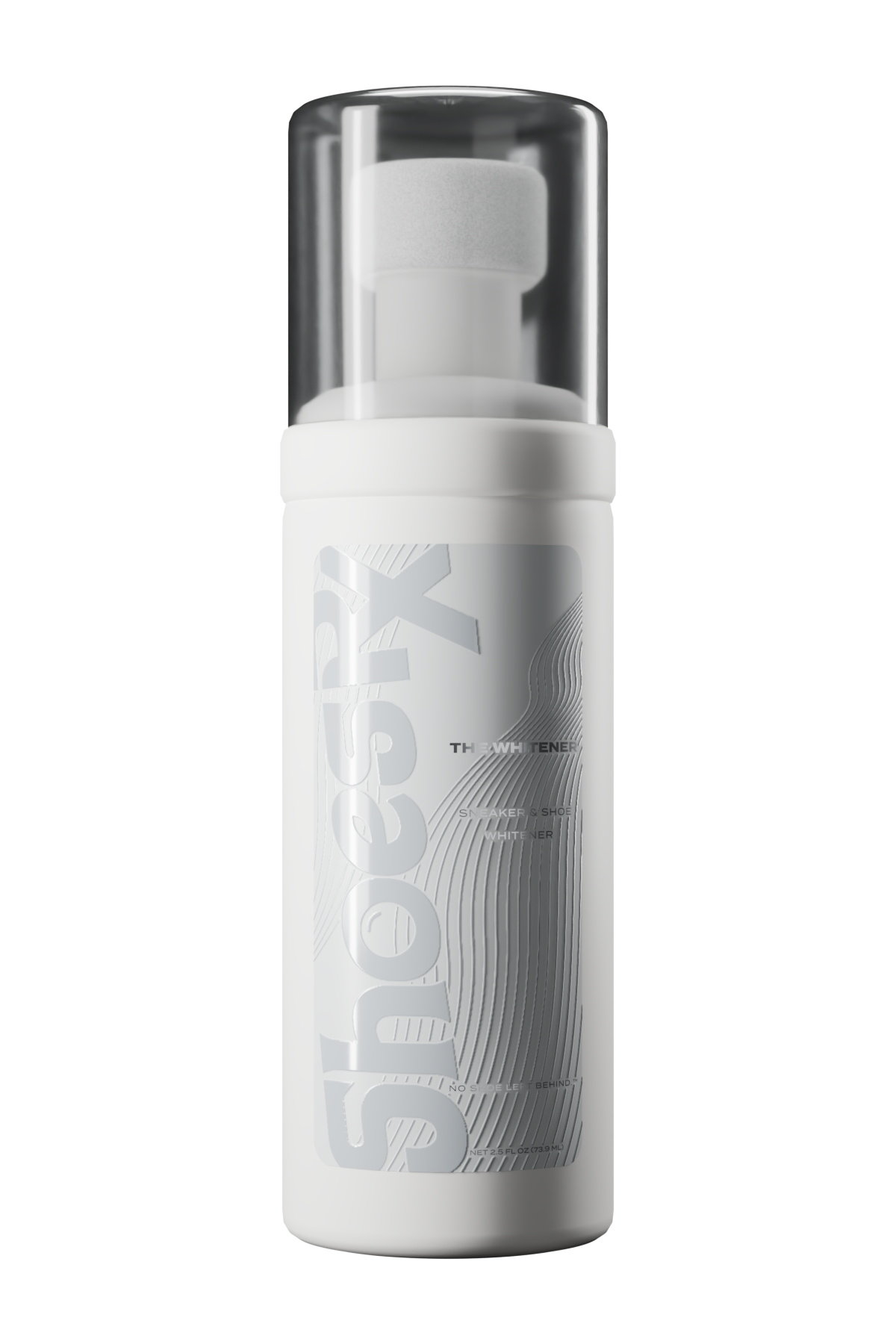
On white midsoles or uppers, apply Whitener evenly with the sponge and let it air dry. The pigment rebuilds a true, opaque white as the water evaporates.
Once dry, mist Protector across the upper from 6–8 inches. Cures in about 30 minutes into an invisible, breathable barrier against water and stains.
Whitening is only for suitable white areas. Protection goes on clean, dry shoes.
Why do different materials need different methods?
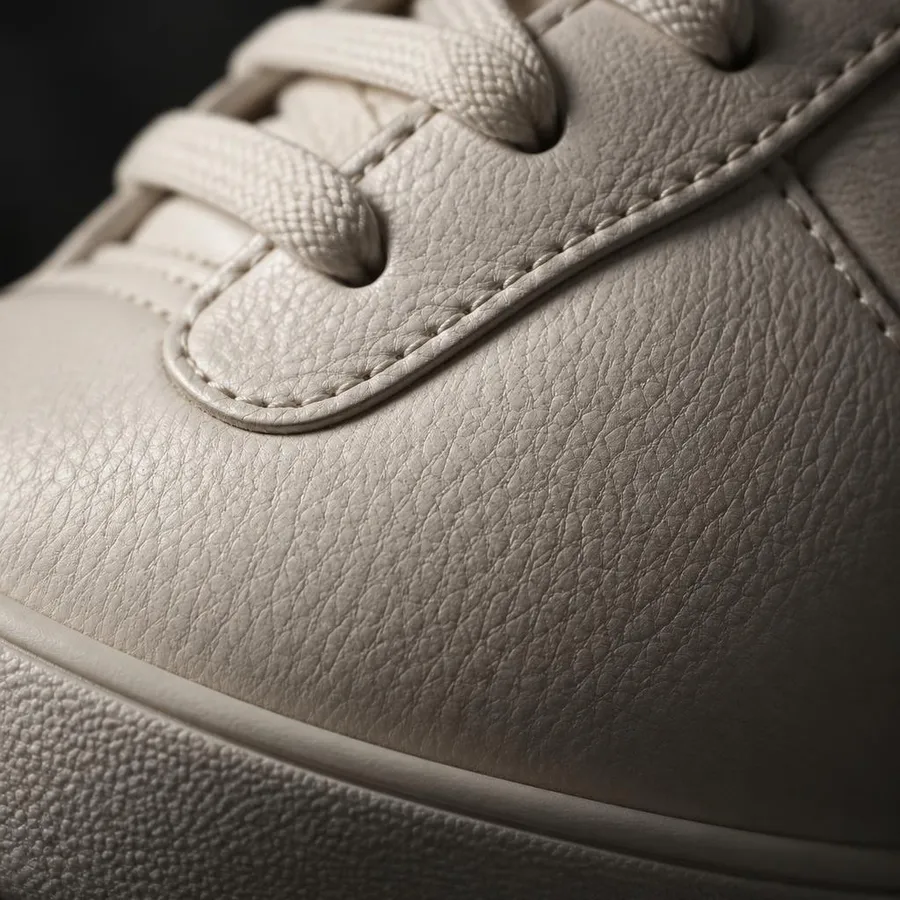
Materials hold dirt differently. Smooth leather has a sealed finish where dirt sits on top; suede and nubuck have an open nap that absorbs water; mesh and canvas trap dirt between fibres. Pressure, moisture and tools need to match the surface.
Why might a product suit leather but not suede?
Suede's open nap absorbs liquid, which can darken or flatten it. That's why ShoesRx lists only “select suede” and why lighter moisture, the sponge and a patch test matter.
What's the difference between cleaning and whitening?
Cleaning lifts dirt off the surface. Whitening leaves a white finish on white panels and midsoles after the shoe is already clean and dry. They are different products for different jobs, and most shoes only need cleaning.
What does a protector do?
The Protector helps repel water and stains on clean, dry footwear. It doesn't clean, and it isn't a substitute for cleaning.
Why test on a hidden area first?
Dyes, finishes and coatings vary between brands and even between pairs. A small hidden test shows how your specific material reacts before you treat the whole shoe.
When do shoes need special tools or a professional?
Delicate, vintage, painted, intentionally distressed or very valuable pairs — and materials ShoesRx doesn't list — may need specialist tools or professional care.